


What It Is
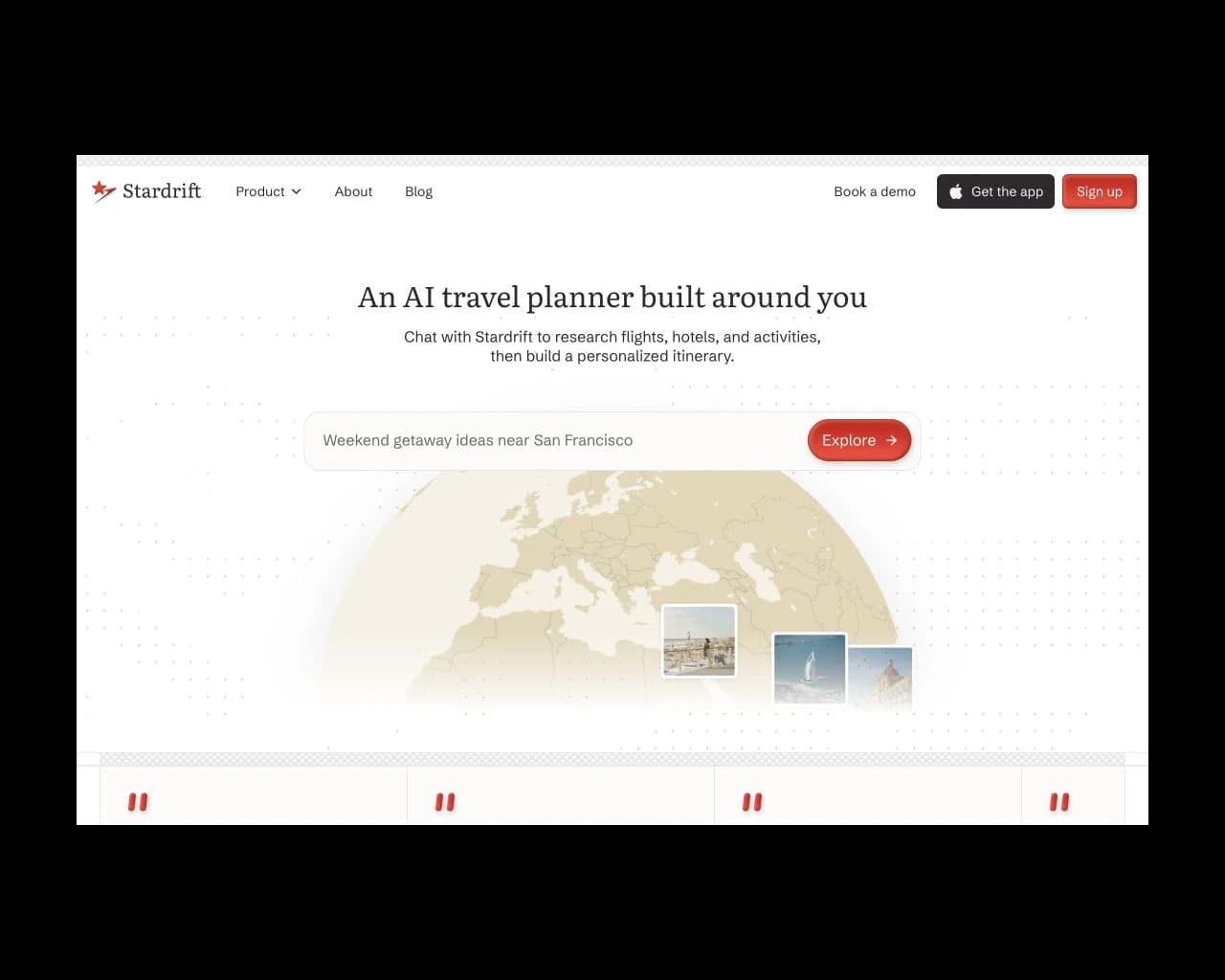
Stardrift helps frequent flyers plan and book complicated itineraries around their schedules and preferences. Leila Clark brought me in early to audit the booking flow and identify places where people might get stuck.
The recommendations below came from that audit. They describe what I would change, rather than results from an implemented redesign.
What I Found
The Agent Feels Stalled
While the agent works, the text and icons stay still. I couldn't tell from the interface whether the search was progressing or had stopped.
Solution
I would update the status as the work progresses and name the current task. Messages such as "searching award space" or "comparing fares" would give someone a reason to keep waiting.
The Flight Data Is Hard to Trust
Some numbers appear without labels, making it difficult to tell which one is the seat count. Fees also change between screens. When someone is deciding whether to book, those inconsistencies leave them with extra work to do. The plain list makes comparing flights harder too.
Solution
I would label each number, keep fees consistent between search and checkout, and arrange the flights in a comparison table. Travellers should be able to compare the same details across options and understand the price they are agreeing to.
The Hierarchy Needs Tightening
The booking buttons look like headings. The primary action also lacks visual priority, so the page doesn't clearly tell you how to proceed.
Solution
I proposed more recognizable button styling and a page order that gives the primary action priority.
The Formatting Drifts
Bullet styles and date formats vary across the flow. The agent's reasoning also resembles its results, which makes it harder to tell what information to act on.
Solution
I would use one bullet style and one date format throughout. Separate block formatting for the agent's reasoning would help distinguish its explanation from the results.
The Visuals Are Nearly There
I liked the line-and-dot motif, but its use was inconsistent. It needed a clearer pattern for where it appeared.
Solution
I would simplify the motif and use it in fewer, consistent places. That would give it a clearer role in the design.
A Note of Thanks
Thank you to Leila Clark for bringing me into Stardrift early. Reviewing the flow gave me a chance to think through a particular problem with agent interfaces. Even when the agent does the searching, the person booking still needs to understand what is happening and what they are paying for.